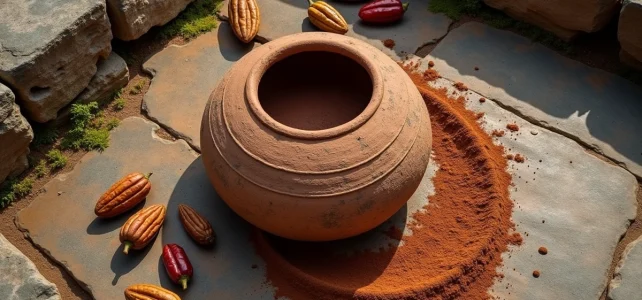
When you pour hot water over raw cocoa mixed with chili, the result is nothing like a hot chocolate on a Sunday morning. The drink is bitter, spicy, almost aggressive. Yet, this is the preparation that the Aztecs consumed daily, long before sugar and milk transformed chocolate into a confection. Understanding Aztec chocolate means returning to a raw material whose current uses retain only a distant echo.
Fermentation of cocoa beans: what happens before roasting
Most content on Aztec chocolate stops at the ritual dimension. The technical step that determines everything else—the fermentation of the beans—is rarely addressed.
A study published in 2025 in Nature Microbiology by the University of Nottingham showed that certain combinations of temperature and pH during fermentation produce distinct aromatic profiles: floral, fruity, or woody notes. These differences appear even before roasting.
Specifically, the microbes present in the fruit pulp break down sugars and acids, altering the chemical structure of the bean. The Aztecs did not understand microbiology, but they empirically identified that the resting time of the beans after harvest changed the taste of the drink. Here we find tips on Aztec chocolate that remind us how the transformation of cocoa remains a living process.
For anyone buying raw cocoa or whole beans today, this information changes everything. Low-temperature fermented cocoa will yield a more floral profile, while warmer fermentation will push towards woody aromas. The bean, not the recipe, determines the taste.
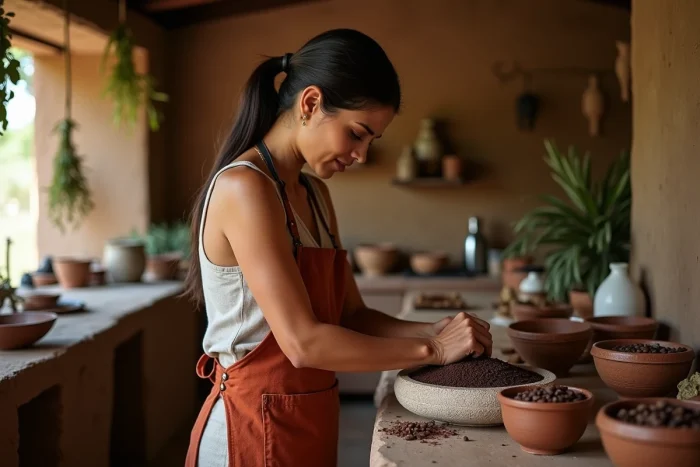
Recipe for Aztec cocoa drink: ingredients and method
Reproducing an Aztec chocolate drink at home requires little equipment but precise ingredients. We move radically away from the sweet cocoa powder sold in supermarkets.
The basic ingredients
- Pure cocoa paste (without sugar, without added cocoa butter), found in gourmet shops or online in blocks or discs
- Dried chili, such as chipotle or ancho, ground into fine powder (the Aztecs used local chili, we adapt with what is available)
- Hot water, not boiling, around the temperature of green tea to avoid burning the cocoa aromas
- Optional: a hint of vanilla or honey to sweeten, even though the original version did not include it
Grate or break the cocoa paste directly into the hot water, then whisk vigorously. The Aztecs poured the liquid from one container to another to create a thick foam. A milk frother does the same job.
The result is a dense, slightly grainy drink, whose bitterness recalls a strong espresso. The chili only comes at the end of the palate. Reactions vary on this point: some find the amount of chili difficult to gauge on the first try.
Cocoa as currency and sacred drink: the dual Aztec use
For the Aztecs, cocoa beans served as currency. Goods, services, and even taxes were paid with beans. This monetary status explains why the cocoa drink was reserved for the elite and religious rituals, not for the everyday consumption of the entire population.
The link with Quetzalcoatl, god of wind and wisdom in Aztec mythology, reinforced the sacred dimension. Botanist Carl Linnaeus named the plant Theobroma cacao, from the Greek “theos” (god) and “broma” (food). The bean was not just a food item; it was a product with a triple function: economic, spiritual, and medicinal.
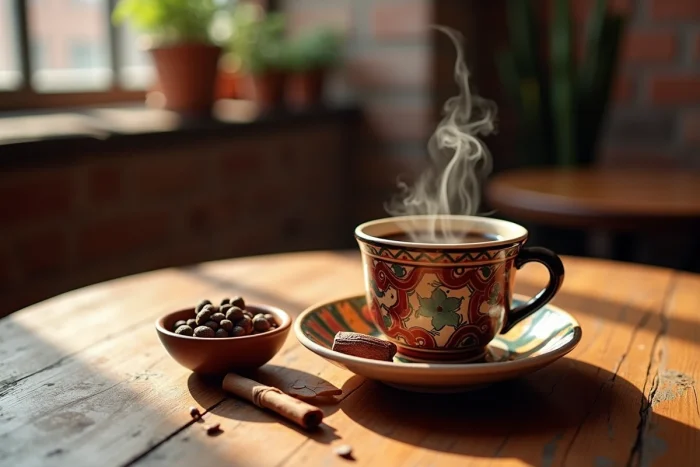
The Aztecs attributed to cocoa virtues against fever, fatigue, and digestive disorders. We cannot verify these claims by current standards, but the richness in polyphenols and theobromine of raw cocoa is documented. Unprocessed cocoa concentrates more active compounds than modern sweet chocolate.
Aztec chocolate versus European chocolate: what changed in the 16th century
When the Spaniards brought cocoa to Europe, they quickly modified the recipe. The chili disappeared, replaced by cane sugar. Milk was added later, first in France, where chocolate became a court drink in the 17th century.
This transformation had a direct consequence: the shift from a bitter, medicinal product to a sweet confection. Cocoa butter, separated from the paste in the 19th century, allowed for the production of solid bars. We then moved from a drink to a mass-consumed product.
For a chocolate lover wanting to recapture something of the Aztec experience, the most reliable option remains raw cocoa in powder or paste, worked without added sugar. The so-called “bean to bar” tablets with high cocoa content come close, but sugar and conching alter the original aromatic profile.
What to remember for your own cooking
Using raw cocoa in savory preparations (Mexican mole, sauce for red meat) remains the most direct way to capture the spirit of Aztec chocolate. Cocoa pairs well with chili, vanilla, and corn, not just with cream and sugar.
The cocoa trade remains marked by significant disparities between producing and consuming countries. Choosing cocoa with documented traceability, from fermentation to sale, provides a more expressive product in the mouth and a fairer supply chain. Aztec chocolate reminds us that the bean, before being a delicacy, was a noble material treated with a rigor that modern industry has largely abandoned.