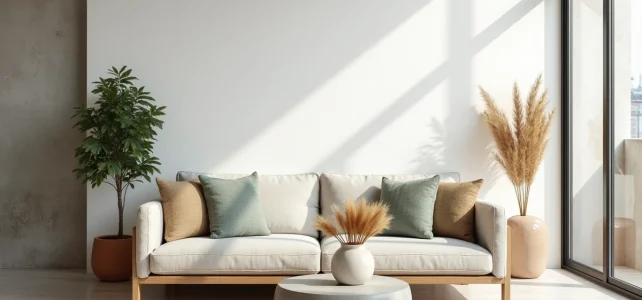
The interior decoration market is shifting towards reversibility and health performance logics that redefine layout choices. Decorating your home with style is no longer just about choosing a color palette or a type of furniture: regulatory constraints on VOC emissions, increasing residential mobility, and the demand for modularity require rethinking every aspect.
VOC Emissions and Health Labeling: The Technical Filter Before the Decor Choice
We observe that the A+ emission class for paints, varnishes, and glues has moved from a niche argument to a priority selection criterion in mainstream ranges. Major DIY retailers systematically incorporate this ranking into their decorative new products, driven by the strengthening of the European strategy for the sustainability of chemical products.
This health filter modifies the hierarchy of choices. A limewash paint, very present in current wall trends, must be evaluated on its volatile organic compound emissions before even considering its color. A+ rated matte or satin water-based finishes offer a comparable result to traditional formulations, without compromising indoor air quality.
For flooring and decorative panels, the same logic applies. Laminates and melamines used in living room or kitchen layouts now display their emission levels, which guides material choices well before the aesthetic question arises. We recommend checking this ranking for any product installed in living areas, particularly bedrooms and poorly ventilated spaces.
To explore interior layout options by room and style, Kamaz’s home page organizes references by product category and usage.
Detachable Furniture and Standardized Modules: Designing a Home for Mobility
Screwed systems are gradually replacing glued assemblies in storage, kitchen, and removable partition ranges. This evolution directly responds to the documented increase in residential mobility among 25-40 year-olds in European metropolises.
The principle is simple: each module adheres to standardized dimensions that allow it to be reconfigured in another home. A library designed with independent boxes adapts to a three-meter wall as well as to a one-and-a-half-meter niche. Manufacturers like IKEA are now structuring their ranges around this promise of reversibility, documented in their “People & Planet Positive 2024” report.
This change has direct implications for interior decoration:
- Modular partitions replace masonry walls to delineate an office or sleeping area, with reusable structures from one home to another
- Kitchen countertops come in repositionable formats, secured by brackets rather than sealed, preserving tenants’ security deposits
- Wall storage adopts standardized rails compatible across brands, facilitating the replacement of fronts or the addition of modules without further drilling
For a tenant or a nomadic teleworker, investing in detachable furniture rather than fixed custom pieces represents a structuring layout choice for several years.
Trendy Colors and Materials: Balancing Atmosphere and Durability
Current color palettes oscillate between soft tones (pink beiges, off-whites, sage greens) and saturated colors driven by the so-called “dopamine decor” trend. Colour-drenching, which involves applying the same shade to walls, ceilings, and woodwork in a room, is gaining ground in living rooms and bedrooms.
We recommend systematically cross-referencing the color choice with the nature of the substrate and the product’s health classification. A sage green in A+ rated mineral paint does not age the same way as a low-cost acrylic version: durability, washability, and behavior under natural light differ significantly.
Regarding materials, wood remains dominant in layout trends, but its treatment is evolving. Raw or lightly oiled finishes (oak, birch, walnut) are supplanting glossy lacquers. Birch plywood panels appear in high-end designs, particularly for loft beds incorporating storage or retractable stairs.
Textiles and Decorative Accessories: Focusing on Longevity
Upholstery textiles follow the same trajectory as paints. Certifications regarding fabric composition (linen, organic cotton, recycled fibers) are becoming a selling point in cushion, curtain, and sofa covering ranges.
For the living room and dining table, trends favor visible natural materials: crumpled linen, artisanal ceramics, blown glass. The desired atmosphere is that of an interior composed of durable pieces rather than disposable seasonal collections.
Room-by-Room Layout: Living Room, Kitchen, and Bedroom Under Real Constraints
Each room in the house imposes its own trade-offs between style and functionality. The living room focuses on issues of lighting ambiance and furniture modularity. The kitchen requires materials resistant to moisture and heat, rated for food contact. The bedroom demands particular attention to nighttime emissions from paints and coverings.
- In the living room, a modular sofa with removable and washable covers better meets current constraints than a fixed model in fragile fabric
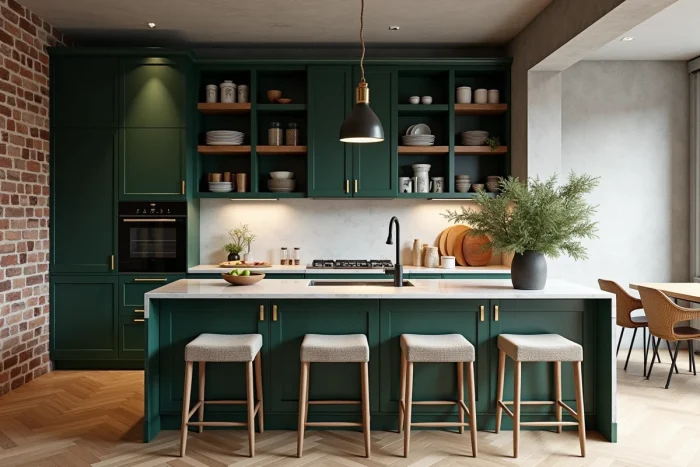
- In the kitchen, structured melamine fronts (wood or stone imitation) offer a compromise between trendy design and mechanical resistance, provided the emission class of the supporting panel is checked
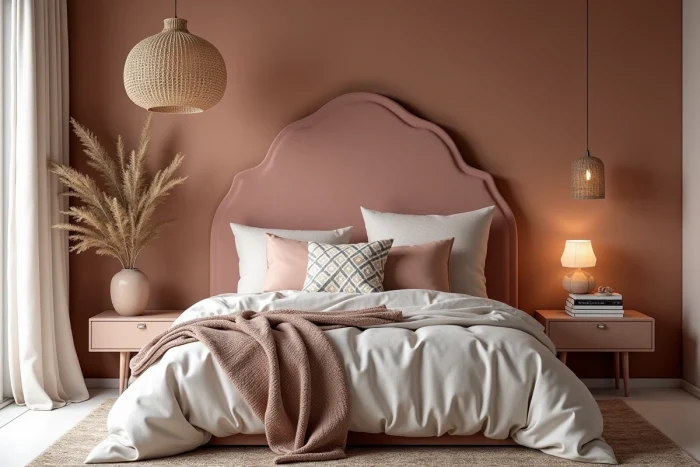
- In the bedroom, limewash effect paints or natural coatings allow for a soft ambiance while maintaining optimal air quality for sleep
Styling a home today relies on technical choices as much as aesthetic ones. Sustainable decoration starts with reading labels, not magazines. Certified materials, reversible furniture, and low-emission finishes define the framework within which personal taste can then express itself freely.