
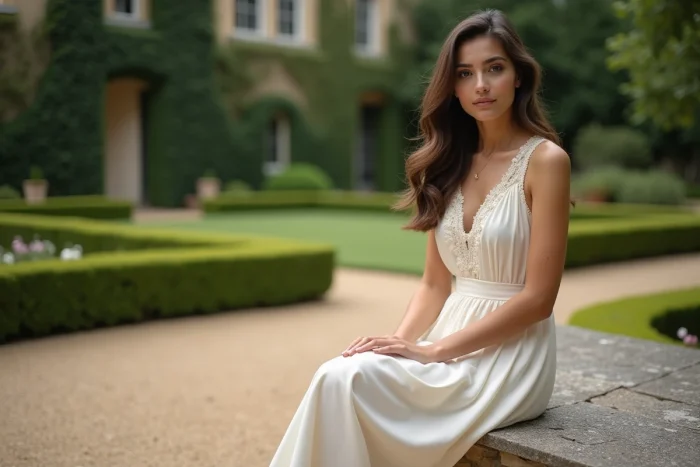
Betul Yilmazturk has held the title of “most beautiful woman in France” for a few months now, a distinction widely shared on social media and picked up by dozens of blogs. The name circulates in Google searches associated with French beauty, competitions, and aesthetic standards. Behind this sudden notoriety lies a simple question: where does this title come from, and what does it actually entail?
Betul Yilmazturk and the absence from official beauty pageant rankings
The first instinct when faced with a title like “most beautiful woman in France” is to search the archives of recognized competitions. Miss France, Miss Universe France, Miss International, Miss Earth France: none of these rankings mention Betul Yilmazturk among their winners. The lists available through the Miss France Committee and the French franchises of international competitions for the recent period do not feature her name.
Read also : The best activities to try for unforgettable experiences in France
This observation changes the nature of the distinction. It is not a national election in the sense that the French public usually understands, with a jury, televised events, and a structured organization. The title stems from a media or private designation, driven by online publications and amplified by viral sharing.
A detailed profile of Betul Yilmazturk on Belle et Naturelle discusses the circumstances of this spotlight and the young woman’s journey.
You may also like : Discover the new secure address of 1 jour 1 film in 2026
Golden ratio and facial symmetry: the pseudo-scientific narrative behind the election
Several articles that contributed to the virality of Betul Yilmazturk rely on an argument presented as scientific: the conformity of her face to the golden ratio and the ideal proportions of facial symmetry. This type of content draws from general studies on facial attractiveness, including research on facial ratios and the perception of beauty.
The problem lies in the transition from the general to the specific. No academic study published in a peer-reviewed journal specifically addresses the face of Betul Yilmazturk. Viral popular science articles, often originating from tech blogs or entertainment sites, apply concepts of facial morphology without verifiable protocols.
What research really says about facial beauty
Research in experimental psychology on attractiveness shows that symmetry plays a role, but it is just one factor among many. Expressiveness, cultural familiarity, and presentation context influence perception as much as geometric proportions do.
Using the golden ratio as the sole criterion to declare someone “the most beautiful” in an entire country is more about storytelling than scientific approach. This gap between the rhetoric used and the lack of rigorous validation is rarely mentioned in the content circulating on the subject.
Viral mechanics and click economy: how a beauty title is created online
The media trajectory of Betul Yilmazturk illustrates a now-common phenomenon. A catchy piece of content (a woman designated “the most beautiful” by an apparently objective criterion) generates clicks. Other sites pick up the information, often without verification, slightly rephrasing it. The title becomes self-referential: each new article citing the previous one reinforces the apparent legitimacy of the distinction.
This mechanism relies on several levers:
- A topic with high emotional charge (beauty, ranking, competition among women) that guarantees a high click-through rate on search engines and social media.
- The use of pseudo-scientific vocabulary (golden ratio, symmetry ratio) that gives an appearance of authority to unsupported claims.
- The repetition of the title “most beautiful woman in France” in SEO tags and headlines, improving positioning in search results and creating a feedback loop.
The result is a notoriety built almost entirely by algorithms and editorial recycling, without a verifiable founding event. The available data does not allow us to determine who initiated the designation or according to which specific criteria.

French beauty and aesthetic standards: what the case of Betul Yilmazturk reveals
Beyond the individual journey, this story questions how France creates its beauty icons. The country has a long-standing tradition of competitions (Miss France has existed since 1920), a fashion and cosmetics sector among the most influential in the world, and a visual culture where appearance occupies a central place.
The viral success of Betul Yilmazturk coexists with official structures without ever intersecting with them. Two parallel circuits operate: on one side, institutional competitions with their rules, juries, and televised broadcasts; on the other, designations born on the web, driven by sharing and search engine optimization.
The question of diversity in beauty criteria
Several pieces of content surrounding Betul Yilmazturk highlight her Turkish origins as a sign of diversity in the representation of French beauty. This point deserves to be noted: official competitions have long been criticized for the narrowness of their aesthetic criteria.
However, reducing diversity to the physical appearance of a single person, elevated to a symbol by blog articles, remains superficial. The question of representation in fashion, cinema, or advertising in France far exceeds the case of a viral designation.
The portrait of Betul Yilmazturk tells less the story of a woman than that of a media mechanism. An appealing title, a pseudo-scientific endorsement, and a mechanism of editorial recycling are enough to create a public figure in just a few weeks. Whether one is interested in the person or the phenomenon, caution is warranted when it comes to distinctions whose origins cannot be traced with certainty.