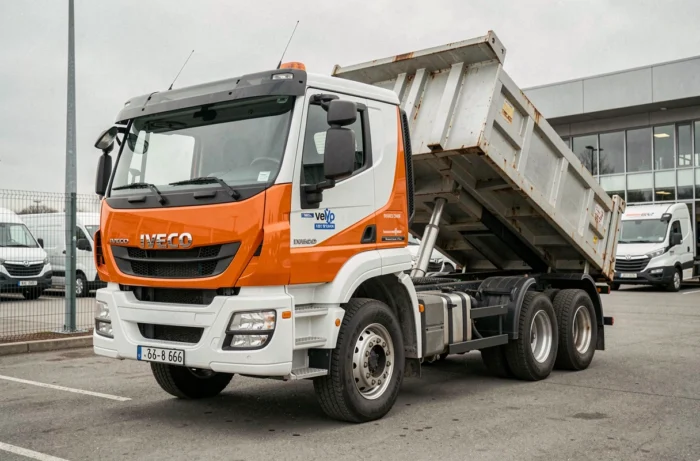
An Iveco dump truck rests on a chassis-cab onto which a tipping body, rear or three-sided, is mounted for the transport of bulk materials. Whether the vehicle is new or used, the purchase involves significant amounts and determines the daily productivity of a construction site or operation. Understanding the technical, administrative, and regulatory points before signing helps avoid difficult-to-absorb extra costs.
Crit’Air Compliance and ZFE: the criterion that listings do not mention
Most buying guides focus on the engine, mileage, and price. A less visible parameter can render a dump truck unusable on part of your routes: the Crit’Air sticker and ZFE restrictions.
Low-emission mobility zones now concern several French urban areas. An older diesel, even if perfectly maintained, may be denied access to certain areas depending on the municipality and the vehicle category. The rules vary from city to city: it is not enough to know the engine type; you must cross-reference the date of first registration (section B of the registration certificate) with the applicable local decrees.
Before committing to buying a new or used Iveco dump truck, check that the vehicle can circulate on all your usual routes. A recent diesel Iveco Daily classified as Crit’Air 2 can currently pass through most ZFEs, but an older model classified as Crit’Air 3 or 4 may be excluded in the short term.
Iveco Daily Chassis-Cab: Understanding the Real Payload
The Daily is the most common base for an Iveco dump truck, both new and used. Its range covers several GVW (gross vehicle weight), which directly determines the mass of materials transportable by rotation.
The payload is not stated in the listing: it must be calculated. You need to subtract the actual empty weight of the vehicle equipped with its body, sideboards, and accessories from the GVW listed in section F.2 of the registration certificate. A three-sided steel body weighs significantly more than a rear aluminum body. On a 35-ton Daily, this difference can represent several hundred kilos less payload.
Check sections F.1, F.2, and G.1 of the registration certificate
Section F.1 indicates the maximum technically permissible mass, F.2 the GVW, and G.1 the empty weight. The difference between F.2 and G.1 gives the administrative payload, but the actual empty weight may differ if equipment has been added after registration (auxiliary crane, tool box, hitch).
Weigh the equipped vehicle on a weighbridge before purchase. This operation costs little and removes any ambiguity about the truck’s actual capacity.
Mechanical Checkpoints on a Used Iveco Dump Truck
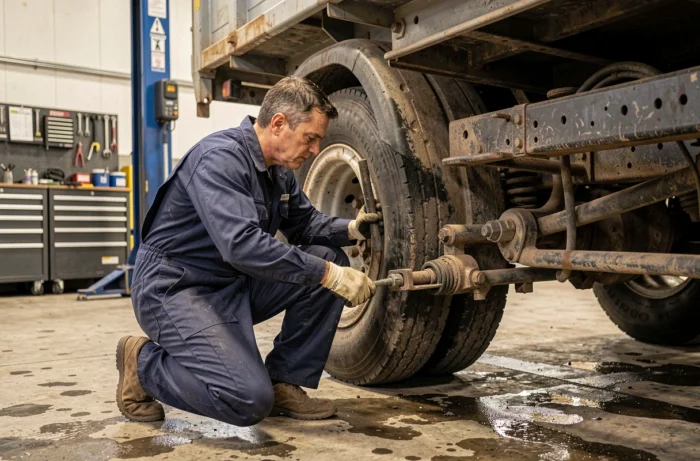
On a new vehicle, the manufacturer’s warranty covers defects. On a used model, the pre-purchase inspection replaces this protection. Three areas concentrate the most frequent problems on an Iveco dump truck.
- The hydraulic cylinder and lifting circuit: check for leaks on the hoses, connections, and the cylinder itself. Operate the body several times empty, then under load if possible. An abnormally long lifting time indicates a worn pump or an undersized circuit.
- The floor and walls of the body: corrosion by perforation is common on steel bodies exposed to wet materials (soil, wet debris). Inspect the underside of the floor and the corner welds. A perforated body can be repaired, but the cost of restoration must be factored into the purchase price.
- The condition of the chassis at the body mounting points: repeated tipping stresses fatigue the anchor points. Look for cracks, signs of non-original welding, or deformations on the beams at the body supports.

Mileage and Usage: Two Data Points to Cross-Reference
A high mileage on the highway wears a dump truck less than moderate mileage on a construction site with frequent lifting cycles. Ask for the maintenance log and invoices: the frequency of hydraulic oil changes and hose replacements provides better insight into the actual condition than the odometer alone.
Tachograph and International Transport: An Obligation to Anticipate
An Iveco dump truck with a GVW exceeding 3.5 tons is already subject to the rules of the tachograph for road freight transport. From July 1, 2026, vehicles or combinations with a maximum authorized mass exceeding 2.5 tons will also be affected when they carry out international freight transport or cabotage.
In the used market, the physical presence of a tachograph does not guarantee its operational compliance. Some listings explicitly state that a visit to the dealership is necessary for the device to be reactivated. Get written confirmation of the equipment’s condition and estimate the recalibration cost if the tachograph is disconnected or expired.
Documents to Require Before Signing the Purchase
Whether the seller is a professional or a private individual, several documents condition the legal validity of the transaction and the vehicle’s registration.
- The original registration certificate, with verification of the weight sections (F.1, F.2, G.1) and the date of first registration (section B)
- The report of the last technical inspection, still valid, mentioning the absence of critical failure
- A certificate of administrative situation (non-pledge) dated less than fifteen days
- The maintenance invoices, including those related to the hydraulic circuit of the body
- The readable manufacturer’s plate, necessary to cross-check weight data with the registration certificate
An incomplete file justifies postponing the sale. The absence of a non-pledge certificate or a valid technical inspection blocks the registration process and exposes the buyer to lengthy administrative complications.
The choice between a new and a used Iveco rarely hinges solely on price. The real payload, access to ZFEs on your daily routes, and the condition of the hydraulic circuit weigh more on the medium-term operating cost than the initial depreciation. Check these three points as a priority; the rest is negotiable.