Some gas boiler models display efficiencies greater than 100% on their technical data sheets, a direct consequence of calculations based on the lower calorific value of gas. Standards evolve each year, modifying energy classifications and the list of equipment eligible for public aid. Since 2024, several brands have withdrawn or adapted models to meet stricter emission thresholds or incorporate new regulation devices.
Price increases on raw materials and fluctuations in national subsidies directly impact installation costs. Performance gaps between models remain significant, even among devices in the same category.
Overview of gas boilers in 2025: innovations, types, and key issues to know
In 2025, the gas boiler must contend with new imperatives. The rules of the game are tightening: stricter regulations, remote-controlled technologies, requirements on pollutant emissions. At the forefront, condensation is becoming essential. It boasts efficiencies exceeding 108% thanks to the recovery of heat normally lost in flue gases. Today, this European standard maximizes every kilowatt-hour of gas used. Low-temperature boilers, on the other hand, are becoming less prominent, challenged by the rise of hybrid solutions and new regulatory requirements.
In this context, hybrid gas-heat pump models are gaining ground. They intelligently manage heat production and domestic hot water, adjusting their operation based on outdoor temperature. This type of installation, often supported by aid programs, appeals due to its ability to adapt to the changing needs of French households.
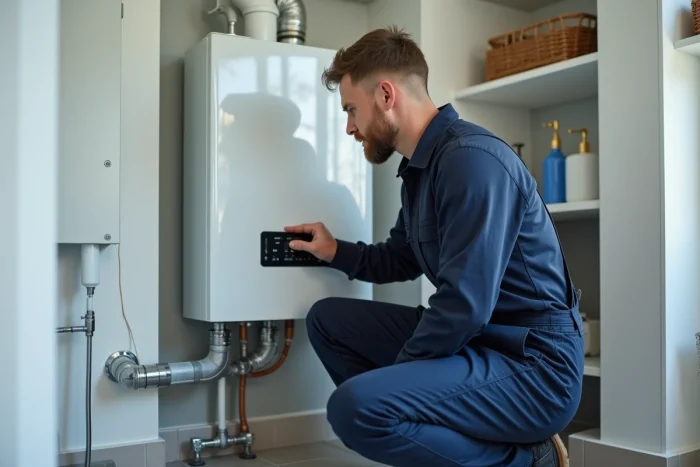
The comparison of gas boilers highlights a varied offering: wall-mounted condensing boilers, ideal for city apartments, powerful floor models to heat large houses, or equipment integrating a tank to ensure domestic hot water at all times. Selection criteria revolve around efficiency, ease of installation, regulation systems, and compatibility with the existing gas network. Before making a decision, one must consider technology, required power, heat management, and housing configuration.
Connected systems are becoming mainstream: remote control, consumption tracking, anticipating needs. Manufacturers are competing in terms of reliability and predictive maintenance, while also focusing on user interface ergonomics. At the center of discussions, the energy transition questions the role of gas in the French mix, the integration of hybrid solutions, and the control of operating expenses. These elements become crucial in guiding one’s choice.
How to effectively compare models and choose the gas boiler suited to your needs?
Comparing a gas boiler is no longer just about lining up specifications on a sheet. The comparison of gas boilers requires a detailed analysis, tailored to the reality of the housing and lifestyle. The power, expressed in kW, must exactly match the area to be heated and the quality of insulation. Betting on condensation means choosing the best efficiency and reducing long-term gas consumption.
The choice of model also depends on the production of domestic hot water. An integrated tank can meet the needs of a family, while a small apartment may accommodate an instantaneous system. The lifespan of recent models often exceeds fifteen years, directly impacting the value for money of the investment.
Here are some guidelines to help direct your choice based on housing configuration:
- For a single-family home, the floor gas boiler meets the needs of substantial volumes or renovations.
- In an apartment, wall-mounted versions offer welcome compactness and simplify installation.
Hot water production, noise discretion, intelligent control: these elements further refine the selection. It remains essential to assess compatibility with the existing installation, availability of spare parts, and the manufacturer’s reputation. The best gas boilers combine reliability, efficiency, and the ability to adapt to the reality of each household.

Prices, financial aid, and tips for a smart purchase in 2025
The price of a gas boiler varies greatly depending on the chosen technology. Entry-level models remain affordable, but condensation comes at a higher cost, justified by superior efficiency and increased lifespan. Depending on power and options, expect to pay between 1,500 and 6,000 euros for the unit alone. Installation typically ranges from 800 to 2,500 euros, depending on the complexity of the work and the housing configuration.
The legal framework in France encourages the adoption of high-performance heating solutions. Several financial aids accompany this investment: MaPrimeRénov’, zero-interest eco-loans, and a reduced VAT rate of 5.5% on purchase and installation. These programs significantly lighten the bill, provided that the installation of the gas boiler is entrusted to a certified RGE professional. Before starting work, be sure to check eligibility criteria and income caps, which change each year.
Also consider the long-term profitability. A condensing gas boiler, more expensive to purchase, guarantees appreciable energy savings, especially in well-insulated homes. The choice of model should factor in the price of gas, the durability of the equipment, the availability of parts, and the guarantees offered. In 2025, France continues its policy of supporting innovation and energy renovation while making aid programs more accessible to accelerate the modernization of heating systems.
At the dawn of 2025, choosing your gas boiler means building the warmth of tomorrow on solid foundations, armed with rigor and foresight. Today’s decision shapes the comfort and performance of your home for the years to come.